
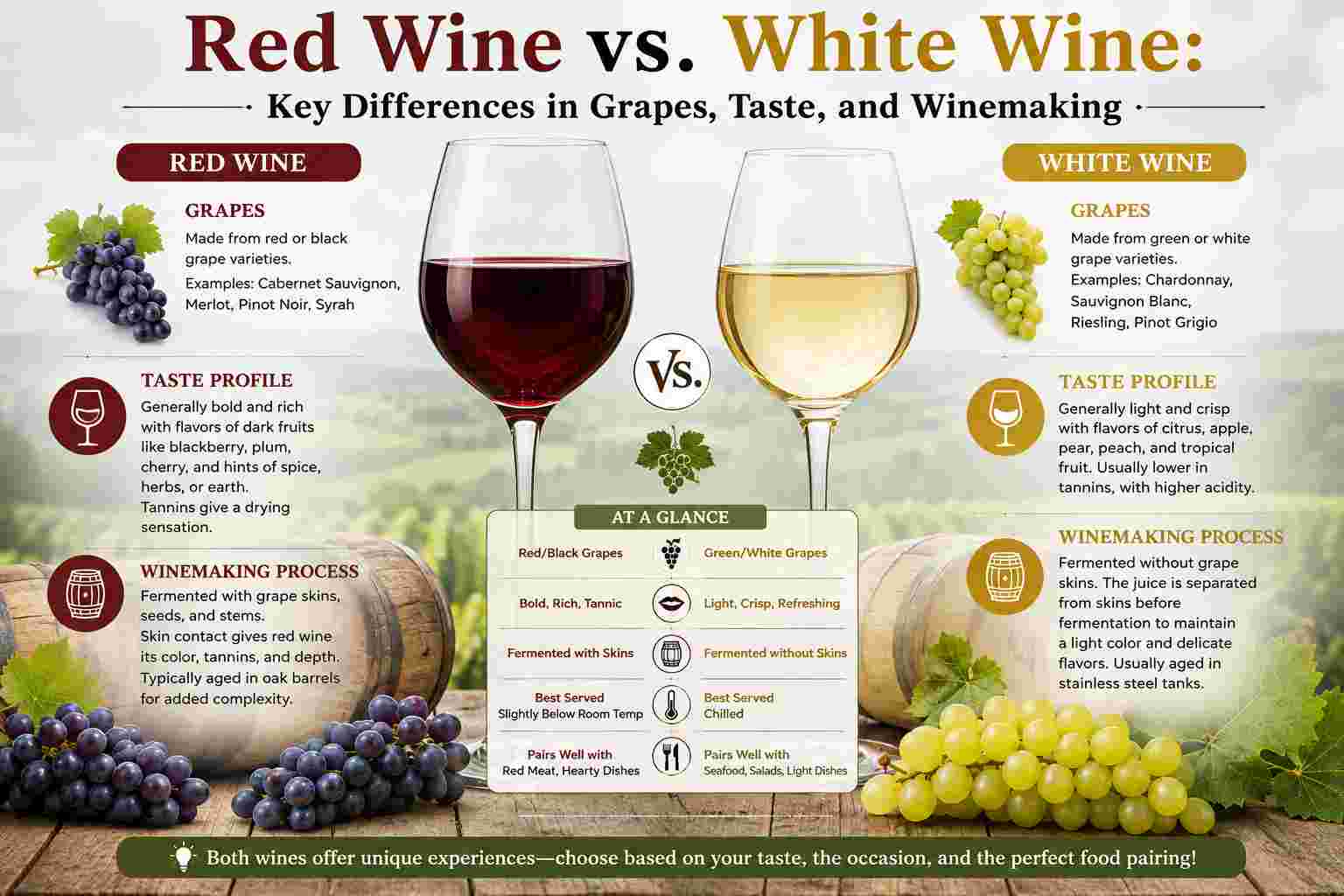
The Biggest Difference Happens During Winemaking
What is the difference between red and white wine? The most important difference is usually how the grape skins are handled during fermentation. Red wine is typically fermented with dark grape skins, which contribute colour, tannin, flavour, and texture. White wine is commonly made by pressing the juice away from the skins before fermentation, creating a lighter-coloured wine with much less tannin.
Grape colour matters, but it is not the whole story. The juice inside many dark-skinned grapes is pale. That means a producer can sometimes make a light-coloured wine from dark grapes by limiting skin contact. Winemaking choices therefore have a major influence on the final colour and structure.
Red Wine Usually Has More Tannin
What Tannin Feels Like
Tannin creates a drying or gripping sensation in the mouth. It comes from grape skins, seeds, stems, and sometimes oak. Because red wines generally spend more time in contact with skins, they tend to contain more tannin than whites. Tannin can give red wine structure and can also help some wines develop over time.
White Wine Often Emphasizes Acidity and Freshness
Many white wines are known for bright acidity, citrus, orchard fruit, tropical fruit, flowers, herbs, or mineral impressions. Without significant skin tannin, the texture may feel cleaner or lighter, although some white wines can still be rich and full-bodied. Aging methods, grape variety, climate, and fermentation choices all affect the final result.
Typical Flavour Differences
Common Red Wine Notes
Red wines frequently show flavours such as cherry, raspberry, blackberry, plum, dried herbs, pepper, earth, cocoa, or spice. Lighter reds may taste bright and delicate, while fuller reds can feel dense and powerful. Oak aging can add notes that remind people of vanilla, toast, smoke, or baking spices.
Common White Wine Notes
White wines may show lemon, lime, green apple, pear, peach, melon, pineapple, flowers, herbs, or honey. Richer whites may gain creamy, nutty, buttery, or toasted notes depending on winemaking. These are broad patterns rather than strict rules.
Serving Temperature Changes the Experience
White wine is generally served cooler because chilling emphasizes refreshment and can sharpen the sense of acidity. Red wine is often served less cold, allowing aromas and texture to open. However, serving red wine too warm can make alcohol feel more noticeable. Light reds can be especially enjoyable with a slight chill.
Food Pairing Is About Weight and Structure
When people ask, “What is the difference between red and white wine?”, they often expect a simple meat-versus-fish rule. Modern pairing is more flexible. A light red can work beautifully with salmon, while a rich white can handle poultry, pork, creamy sauces, or roasted vegetables. The better approach is to match the wine’s body, acidity, sweetness, and tannin to the dish.
Acidity Loves Rich or Salty Food
High-acid wines can refresh the palate when food is creamy, fried, or salty. Tannic reds can work with protein-rich foods because the combination can soften the perception of tannin. Sweet wines can balance spicy or salty flavours when the pairing is chosen carefully.
Neither Colour Is Automatically Sweeter
Red and white wines can both be dry or sweet. Colour does not determine sugar level. A white wine may be bone-dry, off-dry, or dessert-sweet. Red wines are commonly dry but sweet red styles also exist. Always consider the specific style rather than assuming sweetness based on colour.
Rosé also shows why the red-versus-white distinction is not absolute. Many rosé wines are made from dark-skinned grapes but spend only a short time in contact with the skins. That brief contact gives the wine a pink colour and some flavour without the deeper colour and stronger tannin typical of many reds. Orange-style wines reverse the idea by fermenting white grapes with their skins, creating more texture and tannin than most conventional whites.
So, what is the difference between red and white wine? Red wine usually gains colour and tannin from extended skin contact, while white wine is typically fermented with little or no skin contact. That production difference influences colour, texture, flavour, serving style, and food pairing. Once you understand skin contact, the rest of the comparison becomes much easier.